Jul 16, 2026
Where Footage Becomes Film
Editing, color, and sound are where raw footage becomes cinema. Inside FishEye's post-production pipeline, and why the final ten percent defines everything.
Post-Production
Editorial
Color
Sound
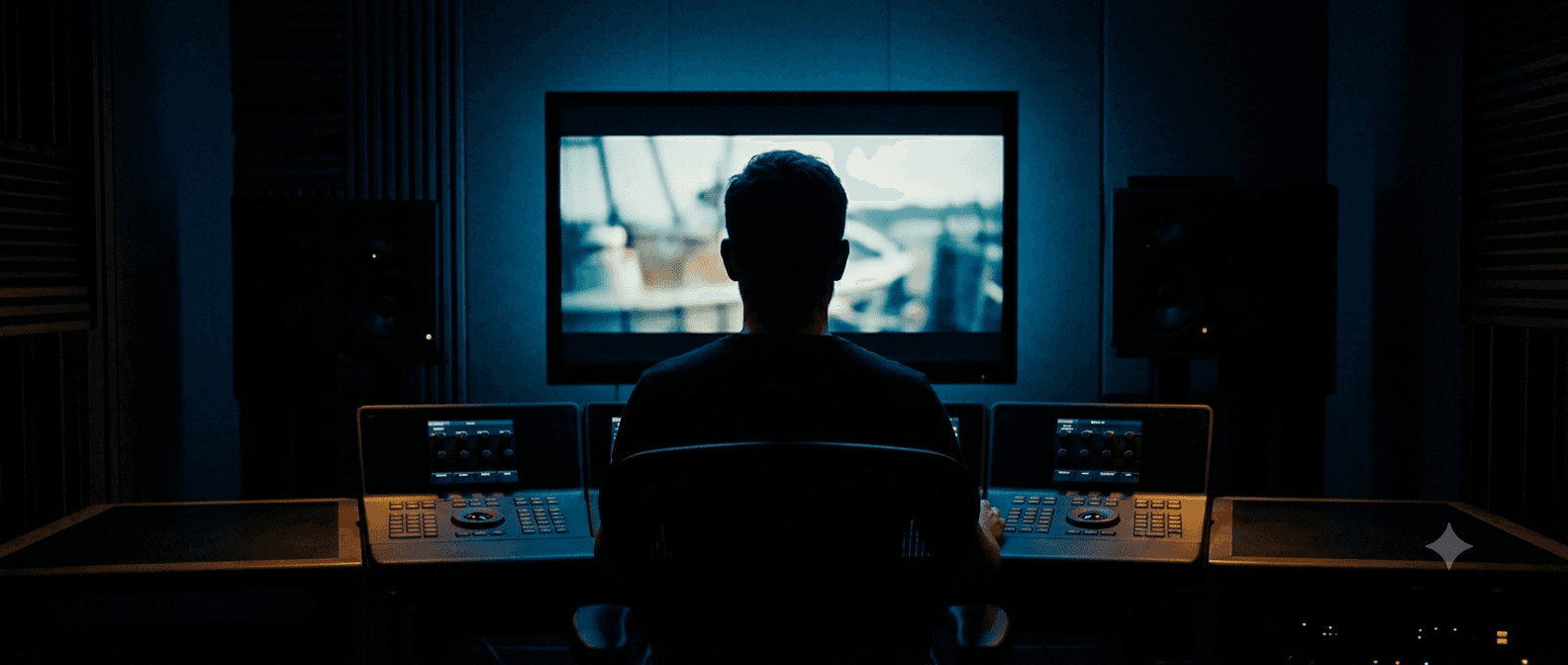
Production captures reality. Post-production gives it meaning. At FishEye, the edit suite is where every story finds its final, truest voice.®
Post-production is often described as a technical phase. At FishEye Films, we treat it as a second act of authorship. Our editors work from the original cinematic treatment, shaping hundreds of hours of field material into a narrative with rhythm, tension, and emotional architecture. Every cut is a decision about what an audience feels, and when they feel it. This editorial discipline is what separates footage that merely documents from films that resonate. Structure comes first: we build the spine of a story in assembly, pressure-test it in screenings, and refine it until the narrative holds without a single wasted scene. Only then does finishing begin. Motion graphics, typography, and visual effects are designed in-house to serve the story rather than decorate it, keeping every element consistent with the film's visual language. The result is a seamless final piece where craft is felt everywhere and noticed nowhere, exactly as intended.

Color
Color is emotion made visible. A single grade can turn observation into intimacy, and that transformation is where our films come alive.
Color grading at FishEye is a narrative instrument, not a filter. Our colorists begin by studying the story's emotional map: where warmth should invite the viewer in, where desaturation should create distance, where contrast should sharpen tension. Each film receives a bespoke palette developed in collaboration with the director, ensuring visual continuity across footage captured in different countries, cameras, and light conditions,a genuine challenge in documentary work spanning 33 territories. Technically, we grade on calibrated reference systems to broadcast and cinema standards, delivering masters ready for festivals, streamers, and theatrical projection alike. But the technology only matters because of what it enables: coherence. When a film moves from a Damascus rooftop to an Istanbul port to a Doha skyline and still feels like one continuous world, that is the grade doing invisible narrative work. Audiences rarely name it. They simply feel that the film is beautiful, deliberate, and whole.


Sound
Audiences forgive an imperfect image, never an imperfect sound. Sound design is the invisible architecture holding every FishEye film together.
Sound is half of cinema, and in documentary it is often more. Our sound designers rebuild each film's sonic world from the ground up: field recordings cleaned and layered, atmospheres composed to place the viewer inside a location, and dialogue treated until every word lands with clarity and weight. Original score is developed alongside the edit rather than added after it, allowing music and narrative to breathe together instead of competing. The final mix is engineered for every destination a film may travel, theatrical surround for festival premieres, broadcast specifications for television, and optimized stereo for streaming platforms. This attention to delivery is not an afterthought; it is a promise that the film an audience experiences is the film we intended, regardless of the screen. From first assembly to final master, FishEye's post-production pipeline exists for one purpose: to ensure that the last ten percent of the process delivers one hundred percent of the impact.


FAQ
01
What makes FishEye Films different?
02
What production services do you offer?
03
Do you work on international projects?
04
Can you manage projects from start to finish?
05
Who do you usually work with?
06
Where does FishEye Films operate?
07
Can your team support local productions?
08
How can we start working together?
Jul 16, 2026
Where Footage Becomes Film
Editing, color, and sound are where raw footage becomes cinema. Inside FishEye's post-production pipeline, and why the final ten percent defines everything.
Post-Production
Editorial
Color
Sound
Production captures reality. Post-production gives it meaning. At FishEye, the edit suite is where every story finds its final, truest voice.®
Post-production is often described as a technical phase. At FishEye Films, we treat it as a second act of authorship. Our editors work from the original cinematic treatment, shaping hundreds of hours of field material into a narrative with rhythm, tension, and emotional architecture. Every cut is a decision about what an audience feels, and when they feel it. This editorial discipline is what separates footage that merely documents from films that resonate. Structure comes first: we build the spine of a story in assembly, pressure-test it in screenings, and refine it until the narrative holds without a single wasted scene. Only then does finishing begin. Motion graphics, typography, and visual effects are designed in-house to serve the story rather than decorate it, keeping every element consistent with the film's visual language. The result is a seamless final piece where craft is felt everywhere and noticed nowhere, exactly as intended.
Color
Color is emotion made visible. A single grade can turn observation into intimacy, and that transformation is where our films come alive.
Color grading at FishEye is a narrative instrument, not a filter. Our colorists begin by studying the story's emotional map: where warmth should invite the viewer in, where desaturation should create distance, where contrast should sharpen tension. Each film receives a bespoke palette developed in collaboration with the director, ensuring visual continuity across footage captured in different countries, cameras, and light conditions,a genuine challenge in documentary work spanning 33 territories. Technically, we grade on calibrated reference systems to broadcast and cinema standards, delivering masters ready for festivals, streamers, and theatrical projection alike. But the technology only matters because of what it enables: coherence. When a film moves from a Damascus rooftop to an Istanbul port to a Doha skyline and still feels like one continuous world, that is the grade doing invisible narrative work. Audiences rarely name it. They simply feel that the film is beautiful, deliberate, and whole.
Sound
Audiences forgive an imperfect image, never an imperfect sound. Sound design is the invisible architecture holding every FishEye film together.
Sound is half of cinema, and in documentary it is often more. Our sound designers rebuild each film's sonic world from the ground up: field recordings cleaned and layered, atmospheres composed to place the viewer inside a location, and dialogue treated until every word lands with clarity and weight. Original score is developed alongside the edit rather than added after it, allowing music and narrative to breathe together instead of competing. The final mix is engineered for every destination a film may travel, theatrical surround for festival premieres, broadcast specifications for television, and optimized stereo for streaming platforms. This attention to delivery is not an afterthought; it is a promise that the film an audience experiences is the film we intended, regardless of the screen. From first assembly to final master, FishEye's post-production pipeline exists for one purpose: to ensure that the last ten percent of the process delivers one hundred percent of the impact.
FAQ
01
What makes FishEye Films different?
02
What production services do you offer?
03
Do you work on international projects?
04
Can you manage projects from start to finish?
05
Who do you usually work with?
06
Where does FishEye Films operate?
07
Can your team support local productions?
08
How can we start working together?
Jul 16, 2026
Where Footage Becomes Film
Editing, color, and sound are where raw footage becomes cinema. Inside FishEye's post-production pipeline, and why the final ten percent defines everything.
Post-Production
Editorial
Color
Sound
Production captures reality. Post-production gives it meaning. At FishEye, the edit suite is where every story finds its final, truest voice.®
Post-production is often described as a technical phase. At FishEye Films, we treat it as a second act of authorship. Our editors work from the original cinematic treatment, shaping hundreds of hours of field material into a narrative with rhythm, tension, and emotional architecture. Every cut is a decision about what an audience feels, and when they feel it. This editorial discipline is what separates footage that merely documents from films that resonate. Structure comes first: we build the spine of a story in assembly, pressure-test it in screenings, and refine it until the narrative holds without a single wasted scene. Only then does finishing begin. Motion graphics, typography, and visual effects are designed in-house to serve the story rather than decorate it, keeping every element consistent with the film's visual language. The result is a seamless final piece where craft is felt everywhere and noticed nowhere, exactly as intended.
Color
Color is emotion made visible. A single grade can turn observation into intimacy, and that transformation is where our films come alive.
Color grading at FishEye is a narrative instrument, not a filter. Our colorists begin by studying the story's emotional map: where warmth should invite the viewer in, where desaturation should create distance, where contrast should sharpen tension. Each film receives a bespoke palette developed in collaboration with the director, ensuring visual continuity across footage captured in different countries, cameras, and light conditions,a genuine challenge in documentary work spanning 33 territories. Technically, we grade on calibrated reference systems to broadcast and cinema standards, delivering masters ready for festivals, streamers, and theatrical projection alike. But the technology only matters because of what it enables: coherence. When a film moves from a Damascus rooftop to an Istanbul port to a Doha skyline and still feels like one continuous world, that is the grade doing invisible narrative work. Audiences rarely name it. They simply feel that the film is beautiful, deliberate, and whole.
Sound
Audiences forgive an imperfect image, never an imperfect sound. Sound design is the invisible architecture holding every FishEye film together.
Sound is half of cinema, and in documentary it is often more. Our sound designers rebuild each film's sonic world from the ground up: field recordings cleaned and layered, atmospheres composed to place the viewer inside a location, and dialogue treated until every word lands with clarity and weight. Original score is developed alongside the edit rather than added after it, allowing music and narrative to breathe together instead of competing. The final mix is engineered for every destination a film may travel, theatrical surround for festival premieres, broadcast specifications for television, and optimized stereo for streaming platforms. This attention to delivery is not an afterthought; it is a promise that the film an audience experiences is the film we intended, regardless of the screen. From first assembly to final master, FishEye's post-production pipeline exists for one purpose: to ensure that the last ten percent of the process delivers one hundred percent of the impact.
FAQ
What makes FishEye Films different?
What production services do you offer?
Do you work on international projects?
Can you manage projects from start to finish?
Who do you usually work with?
Where does FishEye Films operate?
Can your team support local productions?
How can we start working together?